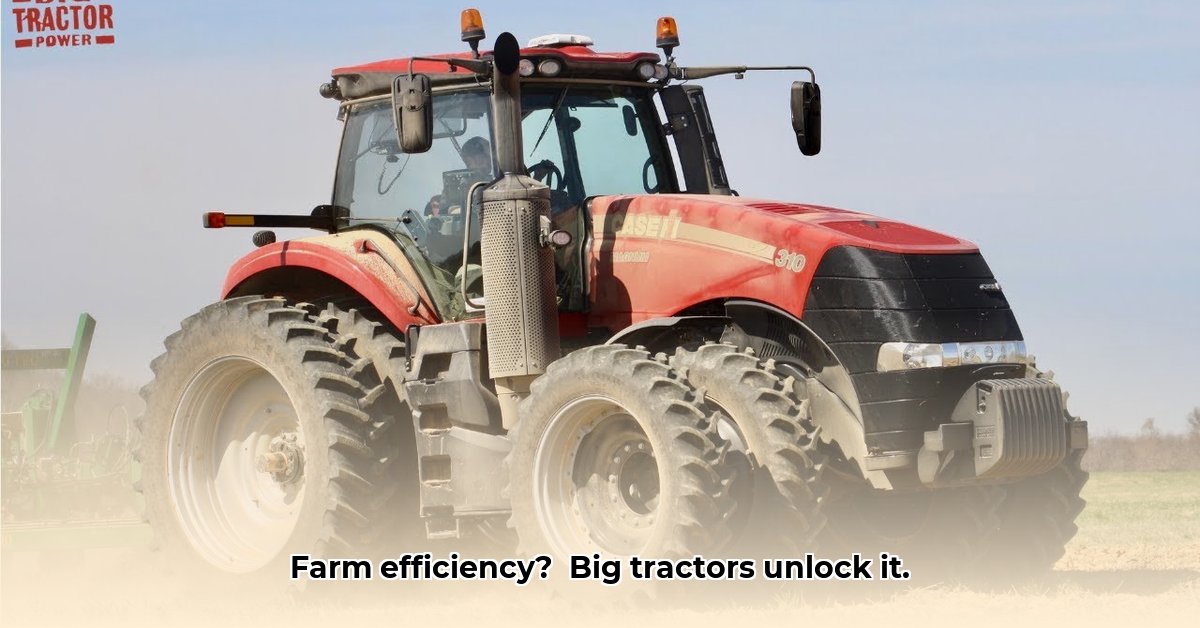
High-horsepower tractors, such as the Case IH Steiger 715, are transforming modern agriculture. However, the efficiency gains offered by these powerful machines must be carefully weighed against potential environmental and economic consequences. For more information on reliable tractors, check out this helpful resource. This article analyzes the Case IH Steiger 715 as a case study, examining its impact on farm efficiency, sustainability, and economic accessibility.
The Case IH Steiger 715: A Technical Overview
The Case IH Steiger 715 is a high-horsepower tractor boasting a 715-horsepower engine, capable of surging to 778 horsepower. Its advertised capabilities include increased speed and efficiency in various field operations, promising significant time savings in plowing, planting, and harvesting. This translates to potential increases in yield and overall productivity. However, this raw power must be considered in light of its efficiency and sustainability.
Efficiency and Productivity: A Critical Assessment
While increased horsepower logically suggests increased productivity, a thorough analysis requires real-world data comparing the Steiger 715's fuel consumption per hectare to smaller tractors performing the same tasks under similar conditions. Manufacturer claims of increased efficiency must be independently verified to account for factors such as field size, crop type, and operating conditions. Independent research comparing fuel efficiency per acre against smaller tractors is needed to validate these claims. The effectiveness may also vary depending on the specific tasks and field conditions. This data-driven approach is crucial to objectively assessing the true efficiency gains.
Sustainability Concerns: Environmental Impact
The environmental impact of the Steiger 715 warrants careful scrutiny. Despite potential gains in fuel efficiency per acre, the sheer fuel consumption remains substantial, resulting in notable greenhouse gas emissions. Additionally, the manufacturing process and eventual disposal of such a large machine contribute significantly to the tractor's overall carbon footprint. The resource investment in manufacturing and the eventual disposal of this machine also contribute to its overall environmental impact. While advancements in sustainable manufacturing and alternative fuels are emerging, a complete life-cycle assessment is necessary for a comprehensive understanding of the Steiger 715's environmental impact.
Economic Accessibility & Adoption: A Matter of Scale
The Case IH Steiger 715 represents a considerable financial investment, far beyond the reach of smaller farms or farmers in developing nations. The purchase price, coupled with operational and maintenance costs, presents a significant barrier to adoption. While financing options exist, the economic feasibility for smaller farms needs to be carefully evaluated. Innovative financial models, such as shared ownership, leasing programs, or cooperative initiatives, could potentially improve access to this technology for a wider range of agricultural operations.
Actionable Strategies & Recommendations: A Multi-Stakeholder Approach
Optimizing the use of high-horsepower tractors necessitates a comprehensive, multi-faceted approach involving farmers, manufacturers, and government agencies.
For Large Farms: A thorough return on investment (ROI) analysis, considering fuel consumption and long-term operational costs, is essential. Exploring viable financing options and integrating precision agriculture techniques to minimize fuel consumption and environmental impact are crucial steps. Investigating alternative fuels and hybrid systems should also be prioritized.
For Small Farms: Exploring leasing or cooperative ownership models can make high-horsepower technology accessible. Focusing on smaller, more fuel-efficient machines tailored to specific tasks is a viable alternative. Advocating for policies that support access to advanced agricultural technology through subsidies or shared resource programs is vital.
For Governments: Implementing monitoring programs to track fuel use and emissions, and enacting regulations on emissions are crucial steps. Investing in research and development of sustainable farming technologies, and providing financial incentives for the adoption of environment-friendly equipment, can help shape a more sustainable agricultural landscape.
For Manufacturers: Improving fuel efficiency through technological advancements and incorporating sustainable materials in manufacturing processes are critical. Developing and implementing alternative fuel systems, such as electric or hybrid tractors, is essential for long-term sustainability in the agricultural sector.
Conclusion: Balancing Efficiency, Sustainability, and Accessibility
The Case IH Steiger 715 exemplifies the complexities inherent in balancing efficiency, sustainability, and economic accessibility in modern agriculture. While high-horsepower tractors offer significant productivity gains, their environmental and economic impacts must be carefully considered. A comprehensive approach involving innovation in technology, financial models, and supportive government policies is crucial to ensure that the benefits of advanced agricultural machinery are equitably distributed and aligned with environmental sustainability goals. Further research and development are needed to optimize the use of high-horsepower tractors within a framework of sustainable agricultural practices.